Moon gardens add a new dimension to your yard. There are many reasons to create a moon garden, which is at its best at night. Perhaps you love to entertain then, or that’s the time you are free to enjoy your outdoor space. Maybe you want a place for communing with nature as the garden glows in the moonlight. Learn how to make the most of a moon garden from expert designers.
- Jan Johnsen is a landscape designer and author of the garden design book Gardentopia: Design Basics for Creating Beautiful Outdoor Spaces.
- Katie Dubow is president and owner of the Garden Media Group.
- Jessi Bloom is an ecological designer based in the Seattle, Washington, area.
- Linda Vater is a garden designer and representative for the Southern Living Plant Collection.
- Mary Phillips is head of Native Plant Habitat Strategy & Certifications at the National Wildlife Federation.
What are moon gardens?
Moon gardens differ from planting by the moon’s phases, although there is some overlap, as they lend themselves to observing and celebrating the moon’s changes. The most common reason to create a moon garden is to enjoy it at night.
Usually, moon gardens are designed with light-reflective plants and surfaces that play with nature’s changing lighting. They may also use lighting fixtures, texture, and scent to enhance the sensory experience and enrich the atmosphere.
“They are often a landscape filled with white, silver, or gray plants and are meant to reflect the moon’s luminous glow when near full,” says Jan Johnsen, award-winning landscape designer and author of the popular garden design book Gardentopia: Design Basics for Creating Beautiful Outdoor Spaces.
When that happens, they “are washed with heavenly lunar light and are particularly lovely in a warm summer evening,” she adds. “It creates almost a mystical setting when the moon seems to make everything glow.”
Why Plant a Moon Garden
Maximizing the evening hours extends your enjoyment of the garden and makes streetscapes more inviting. You may hear them called “moon gardens,” “white gardens,” or “night/evening gardens,” but being spun of light and dark, they are pure glamour.
“Moon gardens extend our enjoyment of the outdoors into the evenings,” says Johnsen.
Another benefit of moon gardens is attracting pollinators that are active at night. Citing skyrocketing Google searches, Katie Dubow, the president of Garden Media Group, says, “Garden Media identifies moon gardens as one of the year’s rising outdoor living trends. This new wave of moon garden cultivators is adding a new twist: using night-blooming and fragrant plantings, specifically hoping to attract night pollinators like moths and bats.”
Tips for Designing a Moon Garden
1. Think safety first.
As with any good design, consider the space’s practical needs first. Think about who will be using the space and how.
“You have to consider lighting and safety while people are walking,” says Seattle, Washington-based ecological designer Jessi Bloom. She uses light-colored or variegated-foliage plants at strategic junctions as a cue to pay attention.
Pay special attention to steep steps, changes of grade, and open water features that call for railings. Uneven surfaces like gravel or mulch pathways can be tricky in heels or on older ankles.
2. Select the right plants and colors.
Choose a palette and the mood you want to strike. While white gardens, like Vita Sackville-West’s famous one at Sissinghurst in England, are resplendent at night, moon gardens aren’t limited to white. However, the plants and fixtures need to be pale enough to see in the lighting you have.
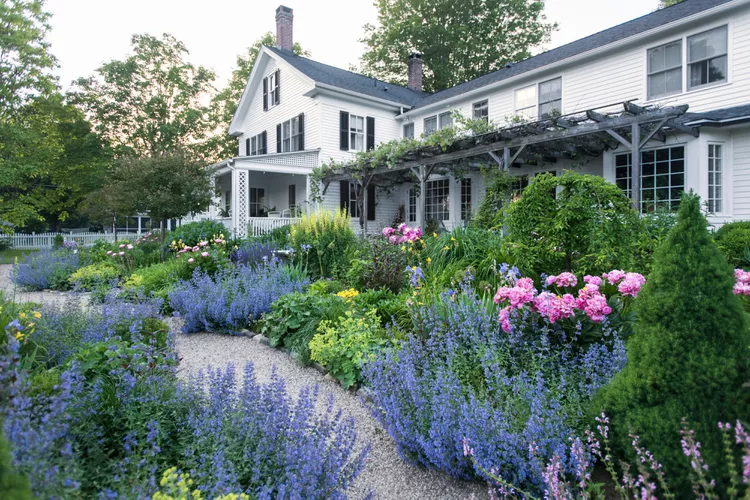
A tapestry of greens and white is soothing and elegant, but silver, pale blue, lavender, lime, chartreuse, yellow, and apricot all shine in moon gardens. Deep-toned plants and accents may disappear at dusk. For example, both red and purple can read as black in the shadows, says Johnsen.
3. Add decorative accents.
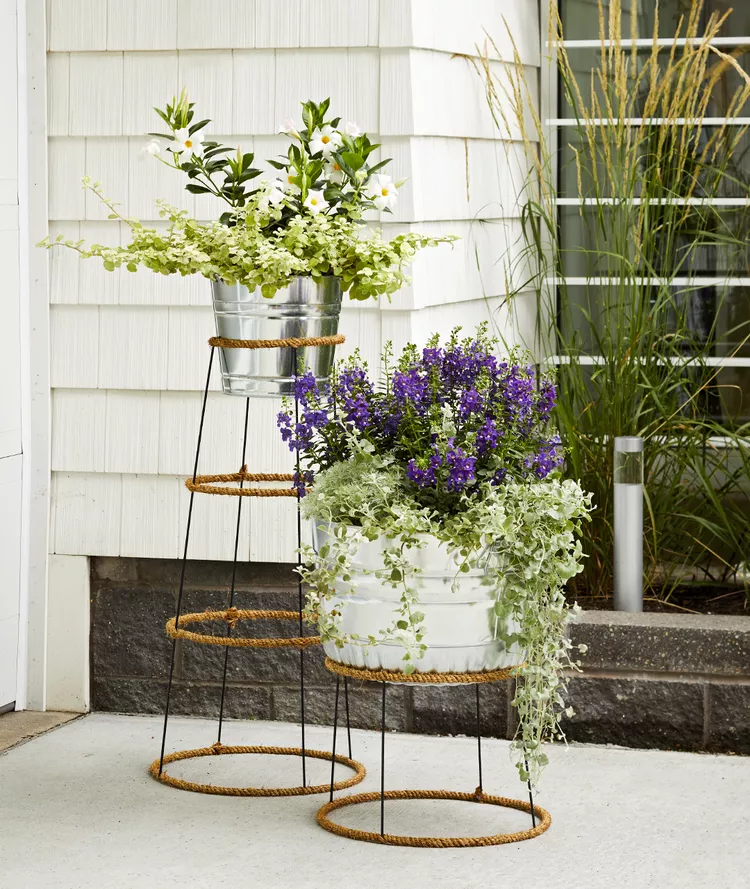
Continue your palette to decorative accents with pale pots, chairs, benches, and lanterns.
Garden designer Linda Vater, who represents the Southern Living Plant Collection, advises thinking holistically about the structure of your plantings.
“Layering varying textures and heights adds depth and mystery to the garden. Strategically spaced evergreens with silvery or light-colored foliage reflect the moonlight and can frame captivating views of the night sky,” says Vater.
4. Focus on fragrance and pollinators.
Amp up the sensory experience of your space at night by incorporating scented flowers. By choosing fragrant flowers that are open at night, you’ll invite and support beneficial night pollinators. Nocturnal pollinators form an important sector of pollinators whose importance we are only beginning to understand.
Certain fragrant flowers have evolved to bloom only at night, reducing competition for pollinators like bats, nocturnal moths, beetles, and bees. They are usually pale or white for easy visibility. Their fragrance often intensifies as the sun goes down, perfuming night gardens and luring their clientele.
Annual moonflowers, night-blooming cereus (Epiphyllum oxypetalum), evening primrose, and night-blooming jasmine (Cestrum nocturnum) are just a few of the fragrant plants that bloom at night.
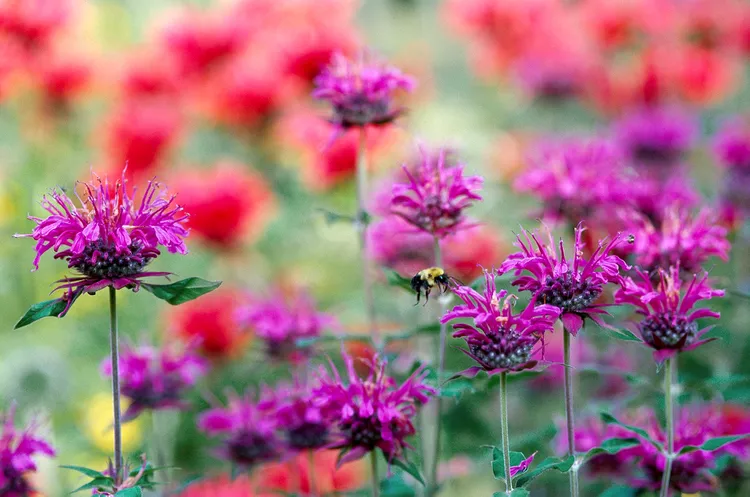
Mary Phillips, head of Native Plant Habitat Strategy & Certifications at the National Wildlife Federation, recommends planting native plants that support local moths, such as asters, wild bergamot, purple coneflower, and penstemon. To feed bats, try agave, yucca, and evening primrose in the Western U.S., where bats feed on nectar, and plant bee balm in the East, where they feed on insects.
5. Add strategic lighting.
Lighting used safely can be a great tool in a moon garden. Phillips recommends minimizing the use of the artificial lights in the garden at night, which can be harmful to nocturnal insects.
Bloom suggests using lower-voltage lights, setting timers, or using candlelight instead.
Bloom also enjoys using lighting to accent key features, whether it’s a special plant, water feature, gate, or art piece.
“One of my favorite trees is ‘Pacific Fire’ vine maple. At night with a little uplight, it’s phenomenal,” says Bloom. “Finally, for a bit of fun, a circular moon gate subtly underscores your garden’s intentions.”